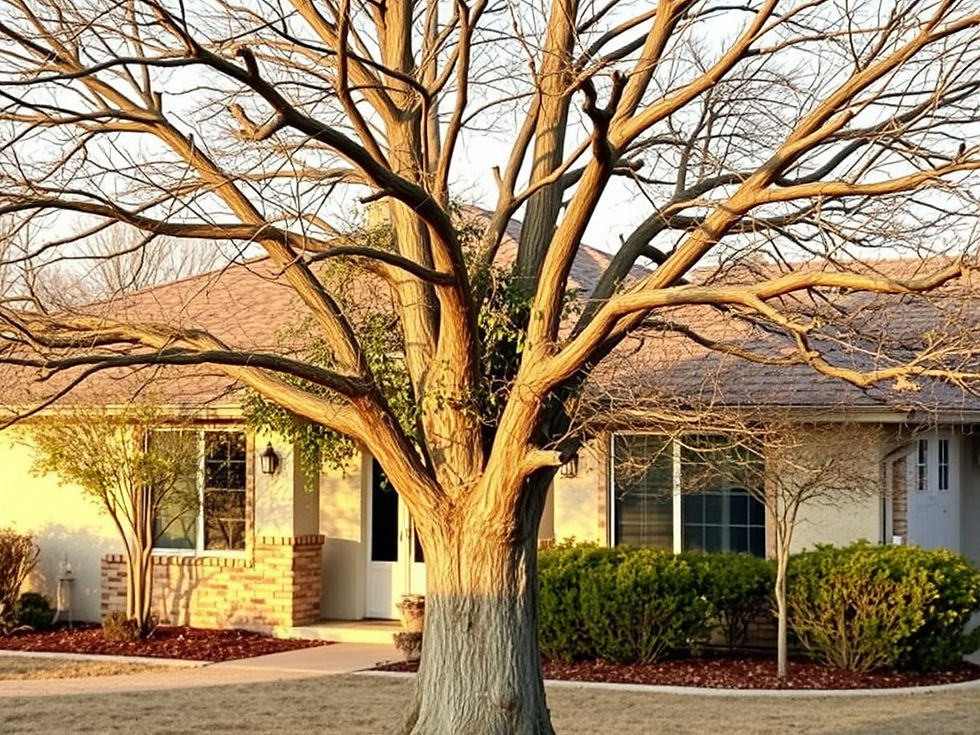
How to Protect Trees From High Winds in Amarillo, TX


The best way to protect trees from high winds in Amarillo, TX is to maintain strong branch structure, healthy roots, appropriate soil moisture, and a balanced canopy before severe weather arrives. Professional pruning, routine tree inspections, proper irrigation, and early correction of structural weaknesses can substantially reduce the risk of broken limbs and tree failure.
High winds are a regular part of life in the Texas Panhandle, which means storm preparation should be an ongoing part of tree care rather than something homeowners consider only when severe weather is in the forecast. A healthy-looking tree can still contain weak branch unions, dead wood, root problems, or structural defects that make it vulnerable when wind speeds increase.
For Amarillo homeowners, proactive tree care can help protect roofs, vehicles, fences, irrigation systems, outdoor living areas, and the trees themselves. Understanding how wind affects trees is the first step toward creating a safer, more resilient landscape.
Why Are High Winds So Hard on Amarillo Trees?
Wind places significant mechanical stress on every part of a tree. The canopy catches moving air, branches bend and twist, the trunk flexes, and the root system must keep the entire structure anchored in the soil.
A healthy tree is designed to move in the wind. Problems develop when structural defects, root stress, poor pruning, disease, or previous storm damage interfere with that natural flexibility.
Several conditions can make Amarillo trees especially vulnerable.
Drought Stress
Long periods without adequate moisture can weaken roots and reduce a tree's ability to maintain healthy wood and foliage. A severely stressed tree may be more susceptible to insects, disease, and branch dieback.
Soil Conditions
Compacted or poorly managed soil can limit root development. Trees need adequate oxygen, moisture, and space for roots to expand. A restricted root system may provide less anchorage when strong winds arrive.
Previous Storm Damage
A branch that partially cracked during an earlier storm may remain attached for months. The next high-wind event can cause that weakened branch to fail completely.
Poor Branch Structure
Trees with multiple competing trunks, narrow branch unions, excessive end weight, or unbalanced canopies may experience concentrated stress during high winds.
The goal of good tree care is not to make a tree completely rigid. Instead, it is to develop a healthy structure capable of moving with the wind without experiencing unnecessary failure.
1. Have Trees Inspected Before Storm Season
One of the most effective ways to reduce wind damage is to identify hazards before the weather becomes severe.
A professional tree inspection can identify problems that are easy to miss from the ground, including:
Dead branches high in the canopy
Cracked or weakened branch unions
Decay cavities
Co-dominant trunks
Root instability
Previous storm damage
Excessively heavy limbs
Disease-related decline
Branches threatening roofs or other structures
Homeowners should also visually inspect their trees throughout the year, particularly after major wind events.
Changes such as a new lean, exposed roots, hanging branches, fresh cracks, or sudden canopy thinning deserve attention.
Wethington Landscape Management provides professional tree care in Amarillo and throughout the surrounding Texas Panhandle. An evaluation by an experienced arborist can help determine which trees need corrective care and which are structurally sound.
Internal linking opportunity: [Tree Care Services]
2. Prune Trees for Strong Structure, Not Just Appearance
Proper pruning is one of the most important tools for reducing wind-related tree damage.
Tree pruning should focus on structural improvement rather than simply making the canopy smaller or more symmetrical.
Professional pruning may involve:
Removing dead branches
Reducing excessive end weight
Correcting rubbing or crossing limbs
Improving branch spacing
Managing competing leaders
Providing appropriate clearance from buildings
Correcting structural weaknesses while trees are young
The exact approach depends on the tree's species, age, condition, and location.
Why Topping Trees Is Not the Solution
Some property owners assume that dramatically cutting back the top of a tree will make it safer in high winds. This practice, commonly called topping, can actually create long-term structural problems.
Topping removes large portions of the canopy and can trigger rapid growth from poorly attached shoots. Those shoots may become large branches over time while remaining structurally weaker than naturally developed limbs.
Instead of indiscriminate cutting, trees should be pruned selectively based on their individual structure.
Internal linking opportunity: [Tree Pruning and Trimming Services]
3. Pay Attention to Dead and Hanging Branches
Dead branches can become especially dangerous during high winds.
Unlike healthy wood, dead branches are often brittle and less capable of bending under pressure. Wind may break them away from the tree with little warning.
Homeowners should watch for branches that:
Have no leaves during the growing season
Have peeling or missing bark
Appear cracked
Hang loosely in the canopy
Have already partially broken
Show extensive decay
A large dead branch over a driveway, patio, walkway, or roof deserves prompt professional attention.
Even smaller branches can become hazardous when carried by strong winds.
4. Keep Tree Roots Healthy With Proper Watering
Wind resistance begins underground.
A healthy, well-developed root system anchors a tree and supports its ability to withstand movement. Trees experiencing prolonged drought stress may have declining roots, while chronically overwatered trees can develop other root problems.
The correct watering strategy depends on tree age, species, soil conditions, weather, and existing irrigation.
In general, trees benefit from water reaching the active root zone rather than receiving frequent, shallow surface watering.
Deep watering can encourage roots to develop throughout a larger soil volume. That contributes to overall tree health and may help trees cope with both drought and environmental stress.
An irrigation system should also be checked for broken heads, leaks, poor coverage, and incorrect scheduling.
Internal linking opportunity: [Irrigation Repair and Maintenance]
5. Don't Ignore Soil Compaction
Healthy trees require more than water. Their roots also need oxygen.
Soil can become compacted by:
Heavy foot traffic
Vehicles
Construction equipment
Repeated machinery use
Improper grading
Compacted soil can restrict root growth and interfere with water and oxygen movement.
This is particularly important around mature trees. Construction or landscaping work that changes soil conditions within the root zone can affect a tree long after the project is completed.
Before major landscape construction, irrigation installation, or grading work near valuable trees, consider how the project could affect existing roots.
6. Consider Cabling or Bracing for Certain Trees
Some mature trees have structural weaknesses but are otherwise healthy enough to preserve.
In appropriate situations, an arborist may recommend cabling or bracing to provide supplemental support.
These systems may be considered for trees with:
Co-dominant trunks
Weak branch unions
Large spreading limbs
Certain cracks or structural defects
Valuable mature canopies worth preserving
Cabling and bracing are not substitutes for proper pruning, and they are not appropriate for every damaged tree. They also require periodic inspection.
A professional evaluation is necessary to determine whether supplemental support is a reasonable option.
Internal linking opportunity: [Tree Cabling and Bracing]
7. Choose Wind-Appropriate Trees When Planting
Storm resilience begins when a tree is selected and planted.
The right tree should be appropriate for:
Amarillo's climate
Available soil volume
Expected mature size
Sun exposure
Irrigation conditions
Distance from structures
Available overhead and underground space
A tree planted too close to a house may eventually require repeated clearance pruning. A species that becomes much larger than expected can create conflicts with buildings, sidewalks, utilities, or other landscape features.
Proper planting depth is equally important. The root flare should be positioned correctly rather than buried deeply beneath soil or mulch.
Good species selection combined with proper installation gives young trees a much better foundation for long-term structural health.
Internal linking opportunity: [Tree Planting Services]
8. Train Young Trees Before Problems Become Expensive
One of the best opportunities to create a wind-resistant tree occurs during its early years.
Young-tree structural pruning can help establish:
A suitable central leader where appropriate
Well-spaced permanent branches
Better branch attachment
Balanced canopy development
Adequate clearance
Correcting a small branch on a young tree is generally much easier than addressing a major structural defect decades later.
Homeowners who have recently planted trees should therefore think beyond watering. Early structural development can influence how safely that tree performs as it matures.
9. Inspect Trees After Every Significant Wind Event
Storm preparation doesn't end when the wind stops.
Walk around your property after a significant storm and look for changes. Keep a safe distance from visibly damaged trees and avoid standing beneath hanging branches.
Potential warning signs include:
Newly broken limbs
Hanging branches
Fresh trunk cracks
Changes in the tree's lean
Soil lifting near the roots
Exposed roots
Split branch unions
Large areas of missing canopy
Damage is not always obvious. A branch may crack without falling, creating a hazard that remains in the canopy.
If a large tree has changed noticeably after a storm, professional evaluation is the safest approach.
10. Know When a Wind-Damaged Tree Cannot Be Saved
Preserving mature trees is often desirable, but safety has to come first.
Removal may need to be considered when a tree has experienced extensive structural failure, severe root instability, major trunk damage, or advanced decay.
Possible warning signs include:
Significant root plate movement
Severe trunk splitting
Extensive decay at the base
Loss of major structural limbs
A sudden, substantial lean
Large sections of dead canopy
The decision should consider the tree's condition and what would be damaged if it failed.
A compromised tree standing in an open area may represent a different level of risk than the same tree positioned over a home, driveway, playground, or frequently used patio.
Internal linking opportunity: [Tree Removal Services]
What Should You Do Before High Winds Are Forecast in Amarillo?
Tree preparation should primarily happen well before a storm is approaching. Major pruning immediately before severe weather is not a substitute for regular maintenance.
If high winds are forecast, homeowners can visually check their property for obvious loose or previously broken branches while staying safely on the ground.
Move vehicles and portable outdoor belongings away from questionable trees when practical.
Do not climb a tree, work near electrical conductors, or attempt to remove large limbs yourself. Large branches can move unpredictably, and storm-damaged trees may contain tension that is difficult to see.
If you discover a concerning tree, arrange for professional assessment.
How Can Landscape Design Reduce Future Wind Problems?
A resilient landscape considers how trees will interact with buildings, irrigation, lawns, and other plantings as they mature.
Good planning means giving trees adequate room for:
Canopy development
Root expansion
Maintenance access
Appropriate separation from structures
It also means selecting plants according to site conditions instead of choosing solely for appearance.
Wethington Landscape Management's combination of tree care, landscaping, and irrigation services allows these parts of the property to be considered together rather than as isolated systems.
Internal linking opportunity: [Landscape Design and Installation]
Frequently Asked Questions About Protecting Trees From High Winds in Amarillo
Can healthy trees still fall during high winds?
Yes. No tree is completely immune to extreme weather. However, healthy roots, appropriate structure, routine inspections, and professional pruning can reduce preventable risk. Severe weather can overwhelm even well-maintained trees, so the goal of tree care is risk reduction rather than guaranteeing that failure will never occur.
Should I prune my trees before every windstorm?
No. Trees should be maintained proactively on an appropriate schedule rather than heavily pruned whenever wind is forecast. Excessive pruning can stress a tree and damage its natural structure. A professional arborist can recommend pruning based on the tree's species, age, condition, and structural needs.
Does thinning a tree canopy make it safer in the wind?
Selective pruning can improve structure and address specific defects, but indiscriminately thinning a canopy is not automatically beneficial. Removing too much foliage can stress a tree and alter how forces are distributed through its branches. Pruning should be based on individual tree structure rather than a fixed percentage or generic formula.
What does it mean if my tree suddenly leans after a storm?
A new lean can indicate root movement or structural failure and should be taken seriously. Look for lifted soil or exposed roots from a safe distance. Avoid standing beneath the tree and arrange for professional evaluation, particularly when the tree could reach a building, driveway, road, or frequently occupied area.
Can tree cabling prevent wind damage?
Cabling can provide supplemental support for certain structural weaknesses, but it cannot make a tree storm-proof. It should only be installed after professional evaluation and needs periodic inspection. Cabling works best as one part of a broader tree management plan.
Should I remove a large tree simply because Amarillo is windy?
Not necessarily. Large, mature trees can provide substantial shade, beauty, and landscape value. A healthy tree with sound structure may continue performing well for many years. Removal decisions should be based on actual condition, structural defects, surrounding targets, and professional assessment rather than size alone.
Prepare Your Amarillo Trees Before the Next Wind Event
High winds are part of the Texas Panhandle environment, but preventable tree failures do not have to be accepted as inevitable. Structural pruning, healthy roots, appropriate irrigation, early defect detection, and professional inspections can help trees withstand demanding conditions while reducing risks around your property.
Wethington Landscape Management provides tree care, pruning, cabling and bracing, disease and insect management, tree removal, irrigation, and landscape services for Amarillo and the surrounding area. Owner Ben is an ISA Certified Arborist, bringing professional tree knowledge into the company's broader approach to landscape management.
If you are concerned about dead branches, a weak tree union, storm damage, or a tree that has recently begun leaning, scheduling an evaluation before the next severe wind event can help you understand your options.
Contact Wethington Landscape Management at (806) 414-5885 or visit https://www.wethingtonlandscapemgmt.com to discuss tree care for your Amarillo property.