
7 Signs It’s Time to Remove a Tree From Your Amarillo Property

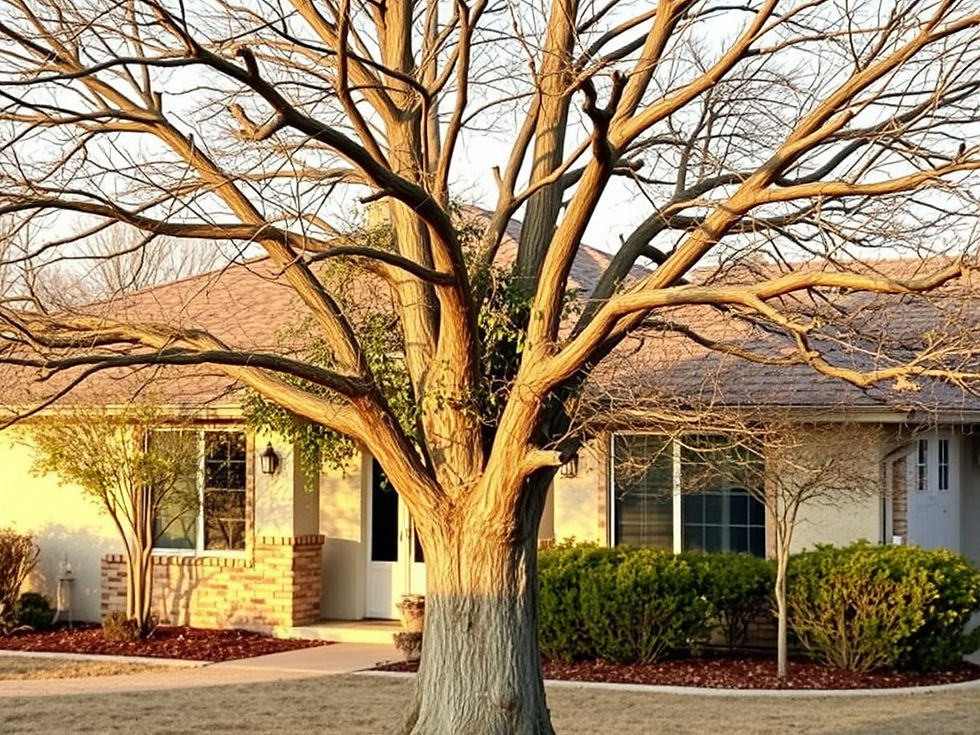
Knowing when to remove a tree in Amarillo, TX can prevent serious property damage, personal injury, and costly emergency repairs. The most common signs a tree needs removal include extensive dead branches, trunk decay, severe storm damage, leaning with root instability, large structural cracks, advanced disease, and proximity hazards near homes or power lines.
In the Texas Panhandle, high winds, drought stress, clay soil movement, and sudden storms accelerate tree decline. While many trees can be preserved with proper care, some reach a point where removal is the safest and most responsible decision.
Below are seven clear warning signs that it may be time to remove a tree from your Amarillo property.
1. Large Sections of the Tree Are Dead
A few dead branches do not automatically mean removal. However, when a significant portion of the canopy is dead — especially more than 40–50% — the tree’s overall health and stability are compromised.
Signs of extensive decline include:
No leaf growth during spring
Brittle limbs snapping easily
Large sections of missing canopy
Peeling bark across major limbs
Fungal growth on trunk
Dead wood becomes extremely hazardous during Amarillo’s strong wind events. Even moderate gusts can send large limbs crashing into roofs, vehicles, fences, or walkways.
If more than half of the tree shows decline, removal is often safer than attempting preservation.
2. The Tree Is Leaning and Soil Is Shifting
A slight lean that has existed for years may not be concerning. However, sudden leaning is a major red flag.
Warning signs include:
Soil heaving or cracking near the base
Exposed or lifted roots
Leaning that worsened after a storm
Cracks forming in nearby pavement
Amarillo’s clay soils expand when wet and shrink when dry. This constant movement can destabilize root systems over time.
A tree that has shifted significantly is at high risk of complete uprooting during the next major windstorm.
3. Large Structural Cracks in the Trunk
Vertical cracks in the trunk or major limbs weaken structural integrity.
Serious cracks may:
Extend deep into heartwood
Split at branch unions
Widen during wind movement
Appear after storms
While minor cracks can sometimes be addressed with structural reinforcement, extensive splitting often requires removal.
If you are unsure whether reinforcement is possible, explore: [Tree Care Services]
An arborist can determine whether cabling, bracing, or removal is appropriate.
4. Severe Storm Damage
Amarillo experiences powerful windstorms, especially in spring.
After severe weather, inspect trees for:
Broken major limbs
Split trunks
Hanging branches
Twisted canopy structure
Major canopy loss
If more than half of the canopy is damaged, the tree may not recover structurally.
Storm-damaged trees often become unstable long after the event, creating delayed hazards.
5. Advanced Disease or Decay
Some diseases can be treated early. However, advanced fungal decay or internal rot often makes removal necessary.
Signs of severe decay include:
Mushrooms growing at the base
Hollow-sounding trunk
Soft or crumbly wood
Large cavities
Extensive bark loss
Internal decay reduces the tree’s ability to support its own weight. Even if the canopy appears partially healthy, internal rot can cause sudden failure.
If disease treatment is still possible, visit: [Disease Management]
Early intervention can sometimes prevent removal.
6. The Tree Is Too Close to Structures
Trees planted too close to homes or driveways may eventually become problematic.
Risks include:
Roots damaging foundations
Branches scraping roofs
Limbs interfering with power lines
Excessive shade affecting roofing lifespan
Structural overhang during storms
As trees mature, what was once safe spacing may become hazardous.
If corrective pruning cannot provide adequate clearance, removal may be necessary to protect property.
7. Repeated Limb Failure
If a tree consistently drops limbs — even during mild weather — it may have underlying structural weakness.
Repeated limb loss indicates:
Poor branch attachment angles
Internal decay
Stress from improper pruning
Long-term decline
Repeated breakage often signals a tree that is nearing the end of its safe lifespan.
In Amarillo’s windy climate, repeated minor failures can escalate into catastrophic breakage.
When Tree Preservation Is Still Possible
Not every concerning sign requires removal.
Preservation options may include:
Structural pruning
Cabling and bracing
Disease treatment
Soil improvement
Irrigation correction
Professional evaluation helps determine whether removal is necessary or whether the tree can be safely preserved.
Learn more: [Tree Pruning or Trimming]
The Risk of Delaying Tree Removal
Postponing removal of a hazardous tree can result in:
Roof damage
Fence destruction
Vehicle impact
Power line interference
Personal injury
Liability claims
Emergency removal after storm damage often costs significantly more than proactive removal.
Addressing risks early protects both safety and finances.
What Happens During Professional Tree Removal?
If removal is necessary, the process typically includes:
Site evaluation
Property protection setup
Sectional dismantling of canopy
Controlled trunk removal
Stump grinding (optional but recommended)
Complete debris cleanup
Professional removal minimizes damage to surrounding landscaping.
For more information, visit: [Tree Removal]
Frequently Asked Questions About Tree Removal in Amarillo
How do I know if my tree is dangerous?
Sudden leaning, large cracks, or extensive deadwood are strong indicators.
Is it better to remove a tree before storm season?
Yes. Preventative removal reduces emergency risk.
Can a leaning tree be saved?
Sometimes. Root stability and overall health must be evaluated.
Do I need a permit in Amarillo?
Most residential removals do not require permits, but HOA rules may apply.
Is stump grinding necessary?
Grinding prevents pest infestation and improves appearance.
When is the best time of year to remove a tree?
Removal can be performed year-round, but winter is often ideal for non-emergency situations.
Protect Your Amarillo Property With Professional Tree Removal
Trees provide shade, beauty, and value to your property. However, when structural stability is compromised, removal becomes the responsible choice. Amarillo’s climate accelerates decline in stressed or damaged trees, making early evaluation critical.
Wethington Landscape Management provides professional tree evaluations and safe removal services throughout Amarillo and the Texas Panhandle. With certified arborist oversight and careful planning, hazardous trees are removed efficiently while protecting surrounding landscapes.
To schedule a tree inspection or removal consultation, contact Wethington Landscape Management at (806) 414 5885 or visit www.wethingtonlandscapemgmt.com during business hours, Monday through Friday, 8 AM–5 PM.


